
Basement waterproofing in Fairfax
Damp Walls or Water on the Floor? Basement Waterproofing in Fairfax, VA
Basement water has several sources, and the right fix depends on which one it is. This page sorts pipes from drainage, covers the outside checks the county recommends first, and explains interior drains, permits and what to ask before a quote.
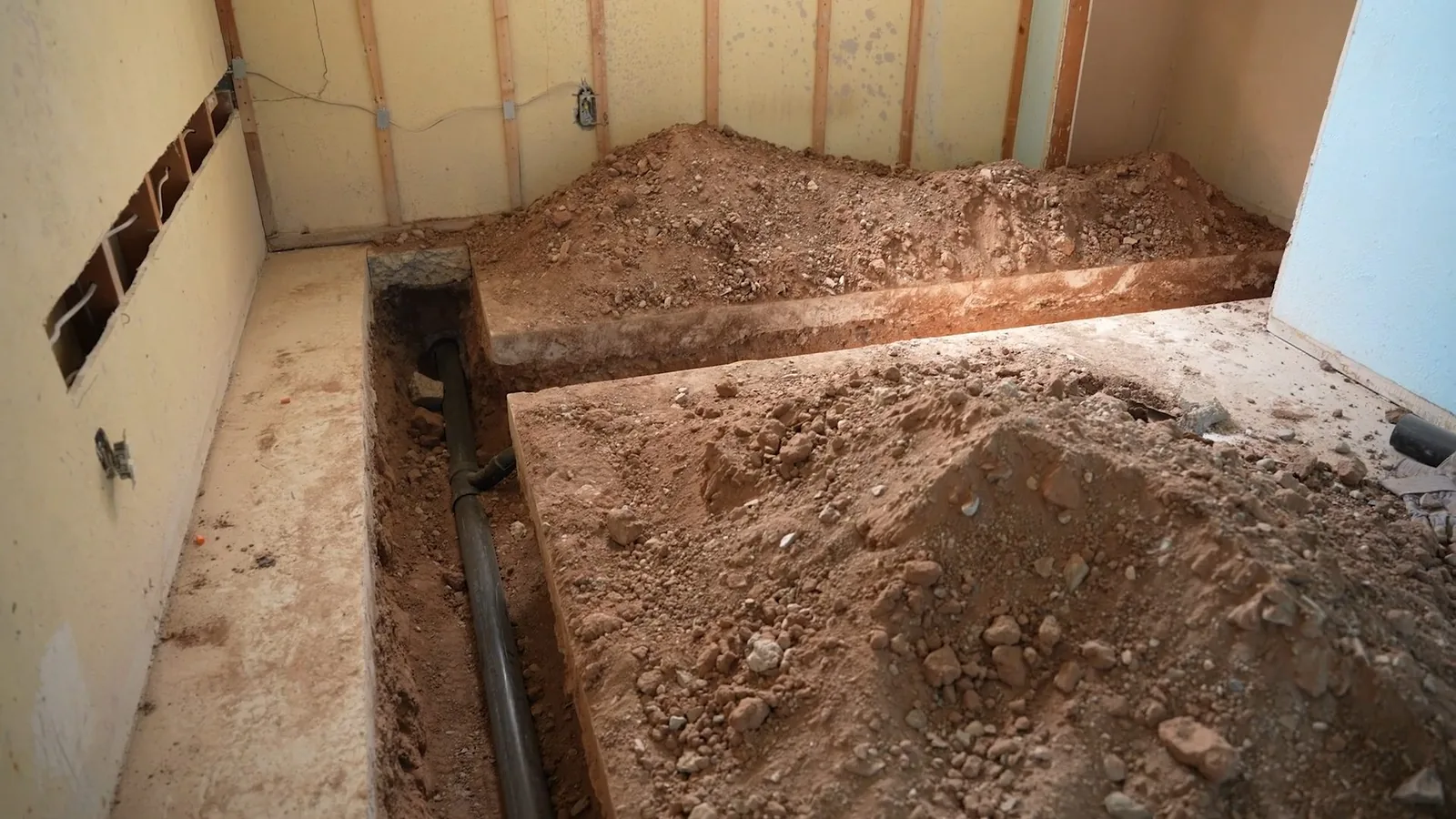
Sort the source: pipe, surface water or seepage
Water in a basement has more than one source, and the fix depends on which one it is. Treating seepage with a wall coating when the water comes from a pipe, or paying for a drain when the problem is a downspout, wastes money. Start by sorting the source.
| What you see | Likely source | Who usually handles it |
|---|---|---|
| Wet wall or floor after rain | Surface water: gutters, downspouts or grading | Often a yard or drainage fix first |
| Damp that never dries, rain or not | A supply or drain pipe leak | A plumber |
| Dirty or smelly water from a floor drain | A backed-up sanitary line | A plumber, urgently |
| White powder on masonry, a musty smell | Moisture moving through the wall | A waterproofing or drainage specialist |
A plumber can settle the pipe and drain rows of that table. The surface water and wall rows depend on the ground around the house, and the honest answer is sometimes a job a plumber does not do alone. A good contractor tells you which part is theirs.
Rule out the pipes before blaming the walls
A leaking pipe in or near a basement wall looks a lot like seepage. The first test removes the guesswork: Fairfax Water describes a no-use test where you turn off every fixture, note the meter reading, wait fifteen minutes and read it again. If the number moved, water is escaping from a pipe somewhere.
That points to tracing a leak behind a basement wall, not to waterproofing. A basement that is wet in dry weather is often a plumbing leak in disguise. If the meter holds still and the water appears only after rain, the source is outside.
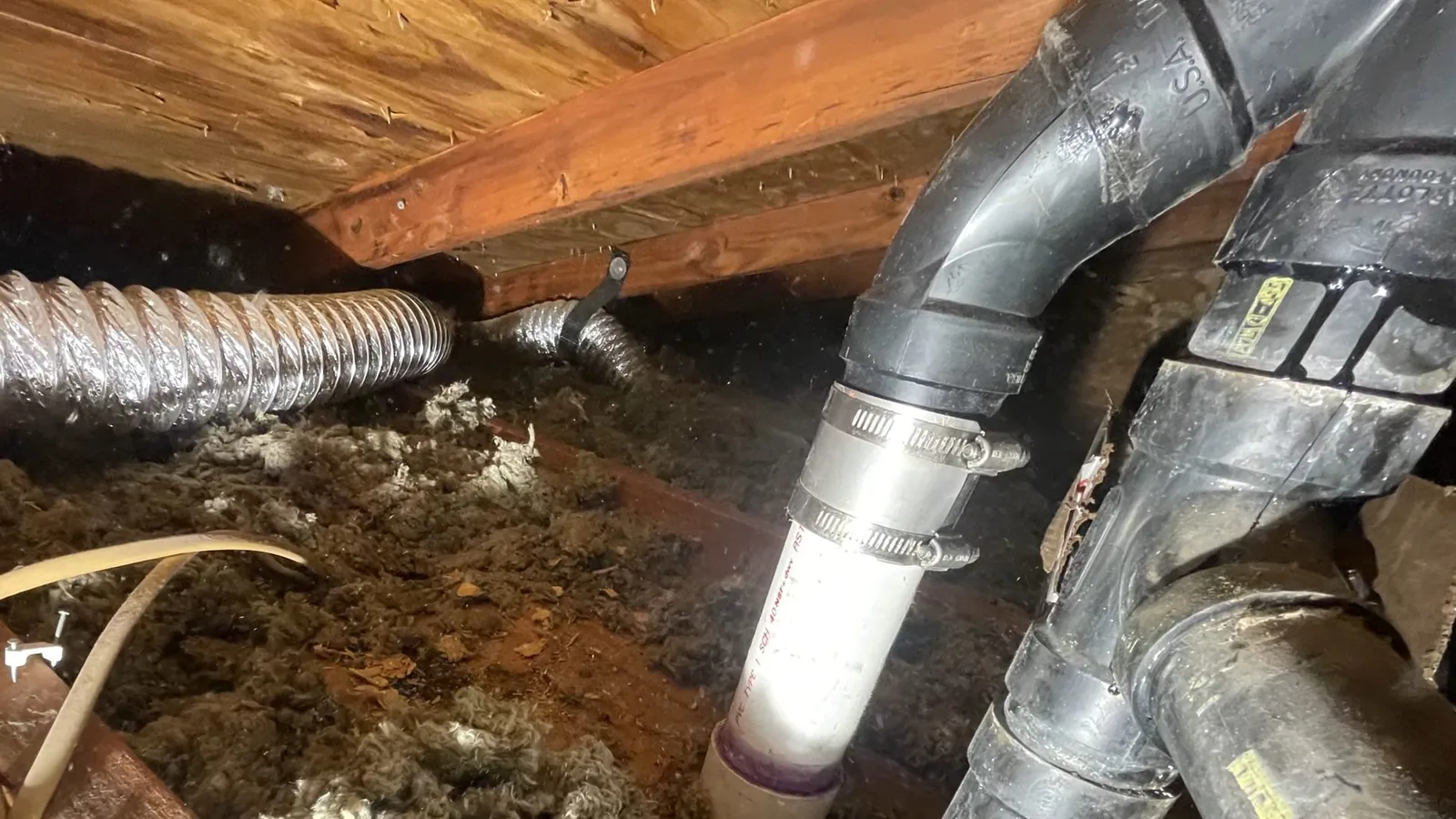
The outside fixes come first: gutters, downspouts and grading
Fairfax County's Soil and Water Conservation District tells homeowners with water problems to check the grading around the house and to address gutter and downspout problems right away. It names undersized or clogged gutters, downspout trouble and poor grading near foundation walls as common causes. It also says to clear leaves and debris from basement stairwell drain grates.
- Are gutters clean and large enough for the roof?
- Do downspouts discharge well away from the foundation?
- Does the soil slope away from the walls, not toward them?
- Is the stairwell drain grate clear?
- Is water pooling near the house after rain?
The District says to call a professional if the problem continues after these steps. Its number is 703-324-1460. These are inexpensive checks, and a contractor who proposes a large interior system without mentioning them has skipped a step.
Digging, permits and the property line
Work that regrades the yard or digs along the foundation brings rules. Fairfax County says any work that changes land, such as regrading or filling, requires a permit. Call 811 before digging, and allow at least three working days, with weekends and holidays excluded, as Virginia811 explains.
Fairfax County also says private drainage systems and groundwater are the property owner's responsibility. For drainage problems on public or private property inside the City, the City of Fairfax lists its city engineer at 703-246-6330. Ask any contractor who applies for permits and who calls 811.
Tell us where the water appears, whether it follows rain and what the meter test showed. That sorts plumbing from drainage.
Call (571) 749-1035Interior drains and wall treatments: what they do
When water cannot be kept out, systems can manage it inside. An interior perimeter drain collects water at the base of the wall, and a vapor barrier or wall coating slows moisture through masonry. They reduce the problem and do not remove its cause.
- Where does the collected water go, and what keeps it moving?
- What is the drain installed in, and how is the floor restored?
- What warranty applies, and what voids it?
- What has been done about gutters and grading?
- Can you show a similar finished job?
The second question matters because an interior drain that cannot discharge only moves the water around. A contractor should answer it plainly before quoting.
Reading the clues: timing, location and smell
The pattern of the water tells you more than the amount. Note when it appears, where it starts and what it smells like. Write the details down with dates, because a contractor can use them and an insurer may ask for them.
- Timing. Water that shows up only during or after rain points outside. Water that is there in dry weather points at a pipe.
- Location. Water at one corner near a downspout is different from water along an entire wall.
- Height. Water high on a wall can come from a pipe above. Water at the floor joint usually comes from the ground.
- Smell. A musty smell means moisture. A sewage smell means a sanitary line and a different response.
Photograph the spot at the same time of day for several days. A pattern that matches rainfall tells a contractor where to look. A pattern that does not match rain tells a plumber the same thing.
A floor drain that backs up is not a waterproofing problem
Fairfax County says a floor drain backup with a sewage smell most likely involves a sanitary sewer. In that case stop using water and call. The sanitary sewer is a line problem, covered under sewage backing up through a floor drain, and the fix is not a membrane or a coating.
A backup that is only rainwater through a stairwell is a surface drainage issue. A backup that smells like sewage is not. If you cannot tell, treat it as sewage.
Flooding, insurance and your records
Fairfax County notes that most homeowner insurance policies do not cover damage caused by flooding, and that flood coverage comes through separate flood insurance. Read your policy before work or a claim. Take dated photos of the water, the source and the damage.
If water has already soaked carpet, drywall or stored belongings, drying is time sensitive. See drying out a flooded basement for what removal and drying involve.
What a written quote should cover
- The source of the water, as found, and how it was found.
- What is proposed, and what is left out and why.
- Who handles exterior work, permits and 811.
- How the floor and walls are restored.
- The warranty, in writing, with its conditions.
Get at least two written quotes against the same findings. For how these projects are priced, see what drives waterproofing prices.
Water in the basement?
Call, say where it appears and whether it follows rain. A plumber serving your area takes it from there.