
Slab leak repair in Fairfax
Warm Floor or Running-Water Sound? Slab Leak Repair in Fairfax, VA
A leak under a concrete floor is hard to see and costly to ignore. This slab leak detection & repair Fairfax VA page covers whether your house has a slab at all, the signs, the meter test that confirms a leak, how it is located, the repair options and the questions to ask first.
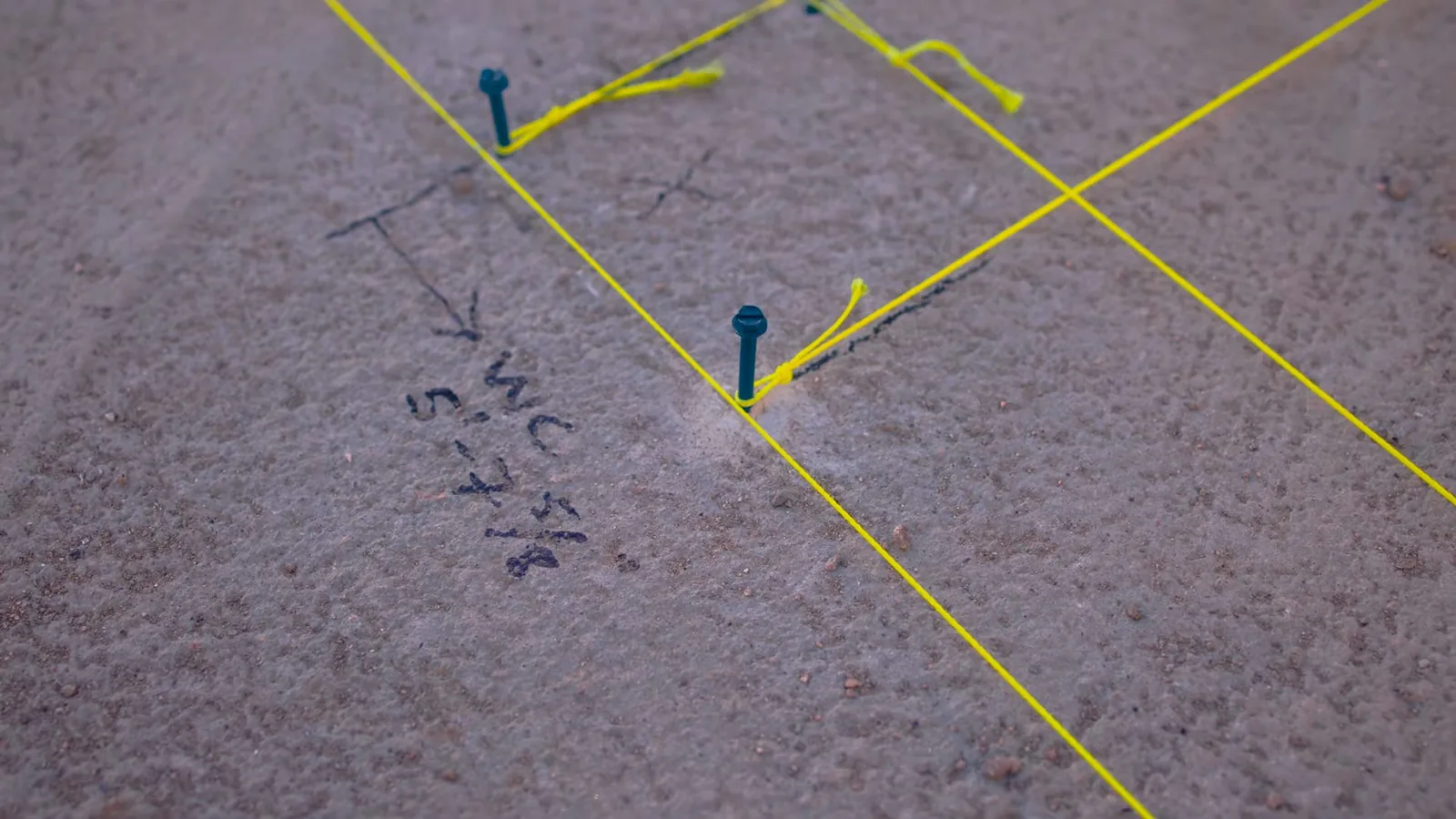
First, does your house even have a slab?
A slab leak is a leak in a supply line that runs under or inside a concrete floor. Not every house has one. Some have basements, some have crawl spaces, and some have a mix. If your home sits over a basement or a crawl space, the pipes are usually reachable from below, and this page matters less.
No source we found says which foundation types are typical across the City of Fairfax, so the safe move is to look at your own house. Check whether the lowest floor is concrete poured directly on the ground. If you rent or are not sure, ask the owner or look at the original plans.
Signs of a leak under the floor
- A floor that feels warm in one spot, which can point to a hot water line.
- The sound of water running when every fixture is off.
- A water bill that rose without a change in how you live.
- Low pressure at fixtures, or a water heater that runs more than it used to.
- A damp carpet edge, a musty smell, or flooring that lifts or cracks.
- Water seeping through a wall base or a baseboard.
One sign alone has many possible causes. Several together, especially a rising bill and a warm spot, make a stronger case. Write down what you notice and when, because the dates help a plumber narrow the search.
Confirm it is a leak before paying for detection
The simplest evidence is already on your property. Fairfax Water describes a no-use test: shut off every fixture, note the meter reading, wait at least fifteen minutes without using water and read it again. If the number changed, water is going somewhere.
Then close the main valve inside the house and check the meter again. If it still moves, the leak is between the meter and the valve, which is a different job from a leak inside the house. The full steps are on the Fairfax Water detecting leaks page. A fixture that leaks into a toilet bowl is also worth ruling out first, as described under the meter test and other early checks.
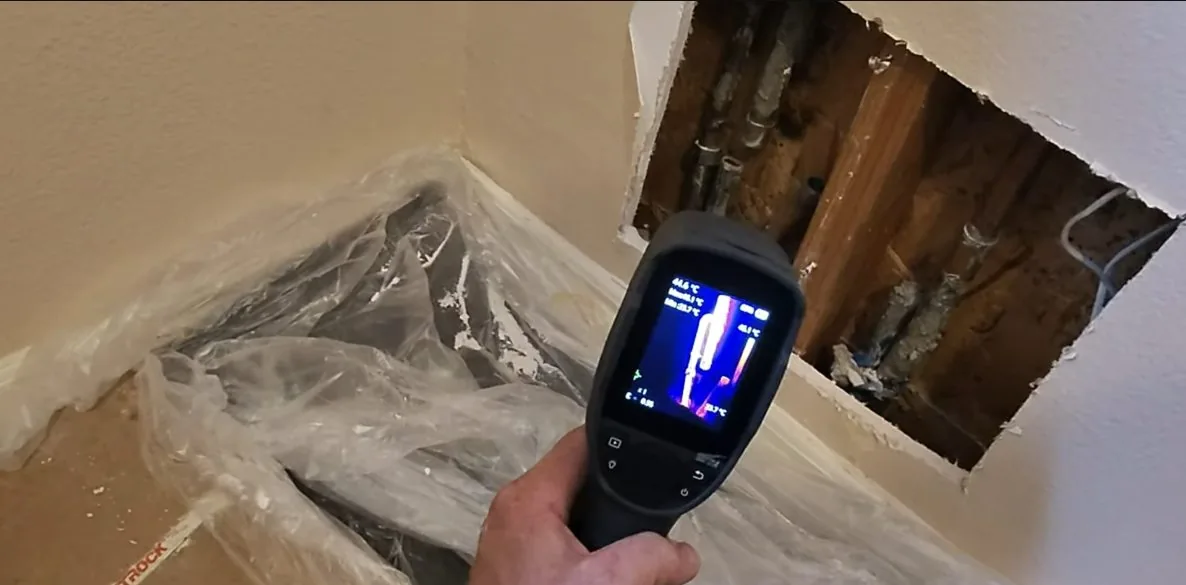
How a leak under concrete gets located
Breaking a floor to look for a leak is a last resort. Detection narrows the search first, and a good plumber explains what was done and why.
- Acoustic listening. Sensitive microphones pick up the sound of water escaping a pressurized line.
- Pressure testing. Isolating each line shows which one loses pressure.
- Thermal imaging. A camera can show a warm path where a hot line is leaking.
- Line locating. Tracing the route of the pipe before any cutting prevents damage to other lines.
Ask which method found the leak and what the plumber is confident about. A location marked on the floor should come with a photo you keep.
Tell us what the meter test showed and where the floor feels warm or damp. That tells the plumber where to start.
Call (571) 749-1035Repair options once the leak is found
| Option | What happens | What to ask |
|---|---|---|
| Spot repair through the slab | The floor is opened over the leak, the pipe is fixed and the concrete is patched | What flooring is removed, and who restores it? |
| Reroute the line | A new line runs through the walls or attic and the old line is abandoned | Where will the new line run, and what is opened? |
| Replace more of the system | Several lines are replaced because the pipe is failing in many places | What shows the pipe is failing beyond this leak? |
A reroute avoids breaking the floor, in the same spirit as the no-dig methods described under repairing a pipe without a trench. If the same line has leaked more than once, ask whether replacing more of the pipe system deserves a quote.
Cutting a slab safely
Concrete floors hide more than pipes. Some slabs are reinforced with steel, and some contain tensioned cables, where cutting in the wrong place is dangerous. Electrical conduit and other lines can also run in the same slab.
Before any cutting, ask the plumber how the slab will be scanned, who is responsible if another line is hit, and whether the slab type is known. If the house is a midcentury build, the plans, if you have them, are worth finding. This is a question to put in writing, not a step to skip.
Water damage and what comes next
A leak under a floor wets the underside of flooring, the base of walls and sometimes the soil. Drying should start soon after the leak is stopped, and the drying and cleanup after a floor leak page explains what removal and drying involve.
If the bill is part of the damage, the one-time courtesy adjustment from Fairfax Water asks for a prompt repair and written proof of it, and does not repeat for five years. Keep the invoice, the photos of the leak and the meter readings together.
Insurance questions to ask early
Whether a slab leak is covered depends on the policy, and policies differ on whether they pay for the leak repair, the access to it or only the damage it caused. Call the insurer before the floor is opened, not after. Ask what documents they want and whether they need to inspect first.
Fairfax County notes that most homeowner insurance policies do not cover damage caused by flooding, which is a separate matter from a plumbing leak. Do not assume either way. Read the policy and ask.
Questions to ask before a floor is opened
- How was the leak located, and how sure is the plumber?
- What are the repair options, and why is this one recommended?
- Who restores the floor covering and the concrete?
- What warranty comes with the repair?
- If the cutting finds something unexpected, who decides what happens?
Get two quotes written to the same scope. For why slab quotes differ, see what moves a slab repair price. If water is running and cannot be stopped, the first-steps page for urgent leaks comes first.
Leak under the floor?
Call, say what the meter test showed and where the floor feels warm or damp. A plumber serving your area takes it from there.