
Trenchless sewer repair in Fairfax
Dig Up the Yard or Line the Pipe? Trenchless Sewer Repair in Fairfax, VA
Trenchless methods repair a pipe with much less digging, but only some pipes qualify. This page compares them with an open trench, explains what the camera must show, covers the City program and 811 steps and notes how rerouting fits in.
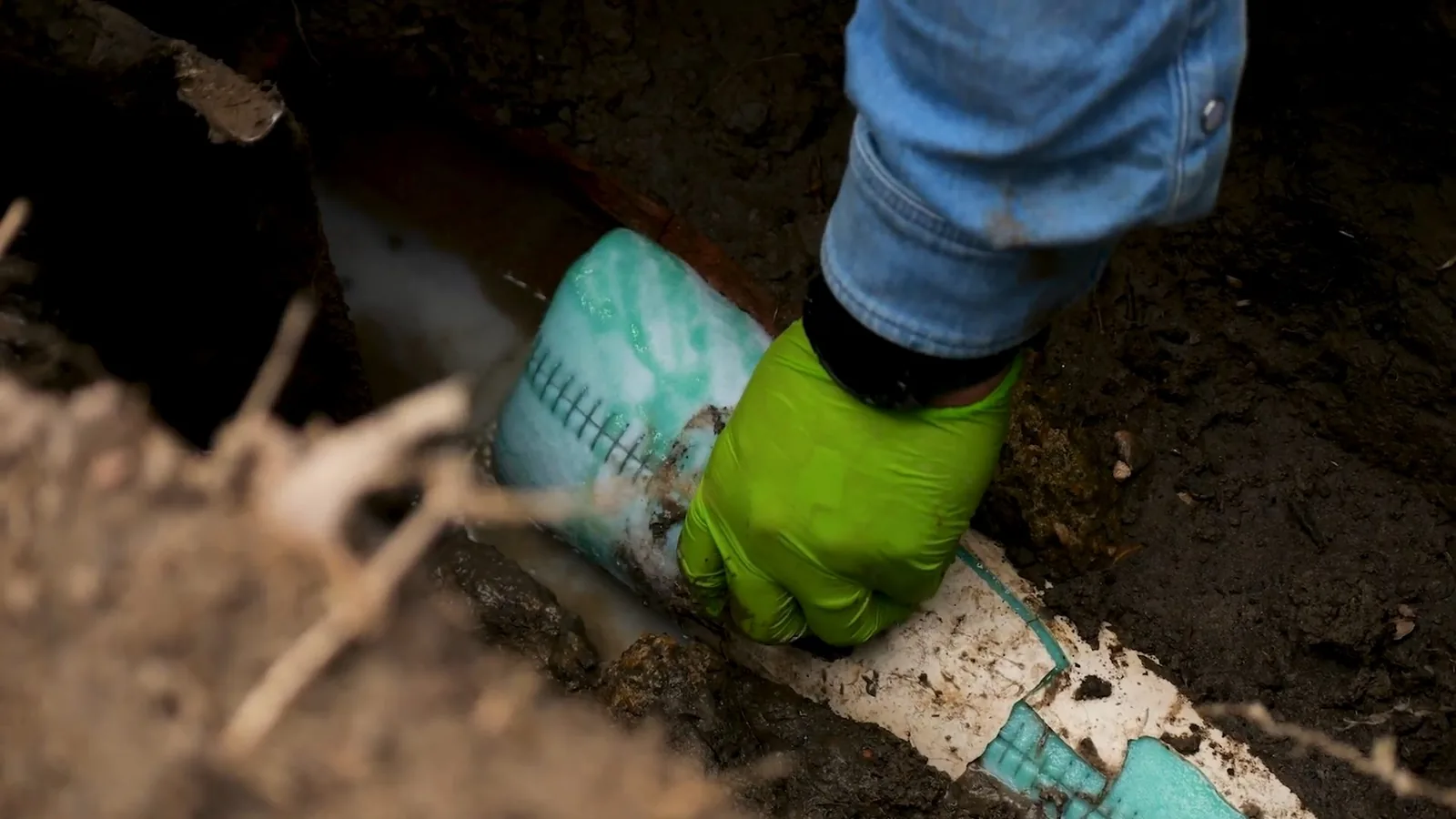
Trenchless or open trench: what is actually different
An open trench means digging along the length of the damaged pipe, removing it and laying a new one. Trenchless methods repair or replace the pipe while digging much less, usually only at an access point at each end. The difference is how much of the yard, driveway or garden is disturbed.
| Method | What happens | Fits best when |
|---|---|---|
| Open trench | The ground is dug along the pipe and a new pipe is laid | The pipe has collapsed, has serious sags or needs to be moved |
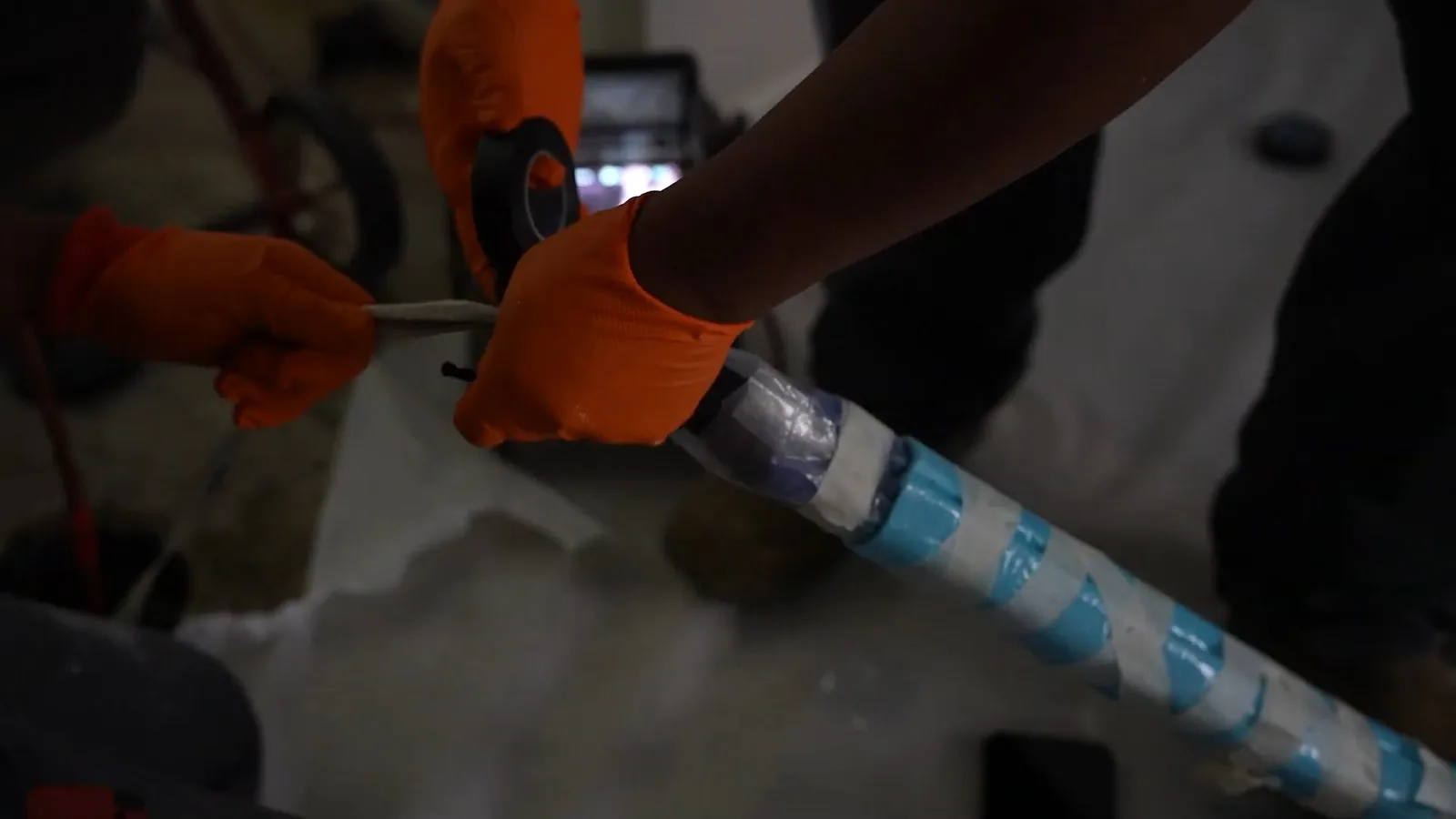
| Pipe lining | A resin-soaked sleeve is pulled into the old pipe and hardened | The pipe holds its shape but has cracks, roots or small breaks |
| Pipe bursting | A new pipe is pulled through as the old one is broken apart | The line needs full replacement along the same path |
Neither approach is better in every case. A pipe that has collapsed cannot be lined, and a sound pipe with a few cracks may not justify a trench. The camera recording decides, which is why that step comes first.
Does your pipe qualify? The camera has to say so
Lining depends on the condition of the pipe it goes into. The sleeve needs a path through the line, and the old pipe needs to be able to hold it. Ask the plumber to share the camera recording and to point out where the pipe is damaged and where it is sound.
- Is the line open from the house to the main, or does it have a break?
- Are there sags, where water sits instead of flowing?
- Is the damage cracks and roots, or a collapse?
- How many bends and connections does the sleeve have to pass?
If the answers point to a collapse or a sag, a trench may be the only option. That is not a failure of the quote. It is what the recording shows. For the step before this decision, see starting with a sewer camera inspection.
Lining and bursting: what each can and cannot do
Lining adds a new inner wall to the old pipe. It can seal cracks and keep roots out of joints, but it leaves the old pipe in place, so the line must be sound enough to carry it. It also reduces the inside diameter slightly, which a plumber should explain.
Bursting replaces the pipe by pulling a new one through the old path as the old one is broken apart. It suits a line that is too damaged to line but is still on a straight route. Neither method fixes a pipe that must move to a new path, which is a trench job or a reroute.
What the City of Fairfax says about trenchless
The City states that property owners are responsible for the sewer lateral all the way to the main in the public right-of-way. Its wastewater lateral repair program reimburses part of the cost for City addresses, and it says trenchless methods are encouraged. The City also says the program does not manage the contractor or take responsibility for the work.
The program asks for these before work begins:
- Two written quotes from contractors.
- One camera recording of the lateral.
- Submission to Public Works for approval.
The City says emergency repairs can be approved in up to four hours. The caps and rates are on the City's lateral repair program page, which is undated, so check it before you rely on a number. These rules apply to City addresses.
Tell us what the camera showed, or that you have not had one yet. That decides whether lining is on the table.
Call (571) 749-1035A trenchless job still digs: 811 and permits
Trenchless does not mean no digging. Most methods need an access pit at one or both ends of the run, and any dig in the ground calls for Virginia811 to be contacted at least three working days beforehand, with weekends and holidays excluded. The Virginia811 page explains the request.
The City says a sewer lateral job needs a plumbing permit applied for by the contractor, and a right-of-way permit from Public Works if the work reaches the right-of-way. Ask each plumber who handles 811, who pulls the permits and who restores the surface around the pit.
Rerouting around a slab: the same idea inside the house
The no-dig idea shows up in another situation. When a pipe under a concrete floor leaks, one repair is to leave that pipe and run a new line through the walls or ceiling instead of breaking the floor. That is a method choice, like lining, rather than a different problem.
The decision itself belongs with finding and fixing a leak in the floor slab, which covers how a leak under a concrete floor is found and what the options are. The questions to ask about disruption and warranty carry over.
What to ask each of the two contractors
- What did the camera show, and why is this method right for it?
- What will be dug, and who restores the yard, driveway or garden?
- What warranty comes with the lining or replacement, and from whom?
- If the pipe turns out to be worse than the recording showed, what then?
- Will the lateral be recorded again after the work?
Ask for the warranty terms in writing, and ask what voids them. A repaired line that is not inspected afterward leaves you with nothing to show for the work, so the final camera pass matters.
Access pits, equipment and water limits during a trenchless job
A trenchless job takes less ground, but it is not invisible. Expect access pits, equipment in the yard, a period when the sewer cannot be used and some water restrictions in the house. Ask how long the line will be out of service and where to go if the family needs a bathroom.
Ask where the pits will go, what is in the way of them and who restores the surface afterward. Mature trees, patios and fences near the line are worth pointing out before work starts. A good quote names them.
Keep both quotes, recordings, permit numbers and the invoice
Keep both quotes, the before and after recordings, permit numbers and the final invoice in one place. If you apply to the City program, Public Works will want the quotes and the recording. If you sell the house, a buyer's inspector may ask for the same papers.
For what moves a sewer repair price, see what sets a lining price, and for a backup that cannot wait, what to do about a sewage backup. A recurring clog may only need cleaning, as scouring a coated pipe explains.
Sewer line damaged?
Call, say what the camera showed or that you have not had one yet. A plumber serving your area takes it from there.