
Whole-house repiping in Fairfax
Pinhole Leaks or Rusty Water? Whole-House Repiping in Fairfax, VA
Repiping is a large job, and it is only worth doing when the pipes as a whole are failing. This whole-house repiping Fairfax VA page covers the signs that point that way, how to find out what pipe is in your walls, how a repipe runs in an occupied house and what the City says about permits.
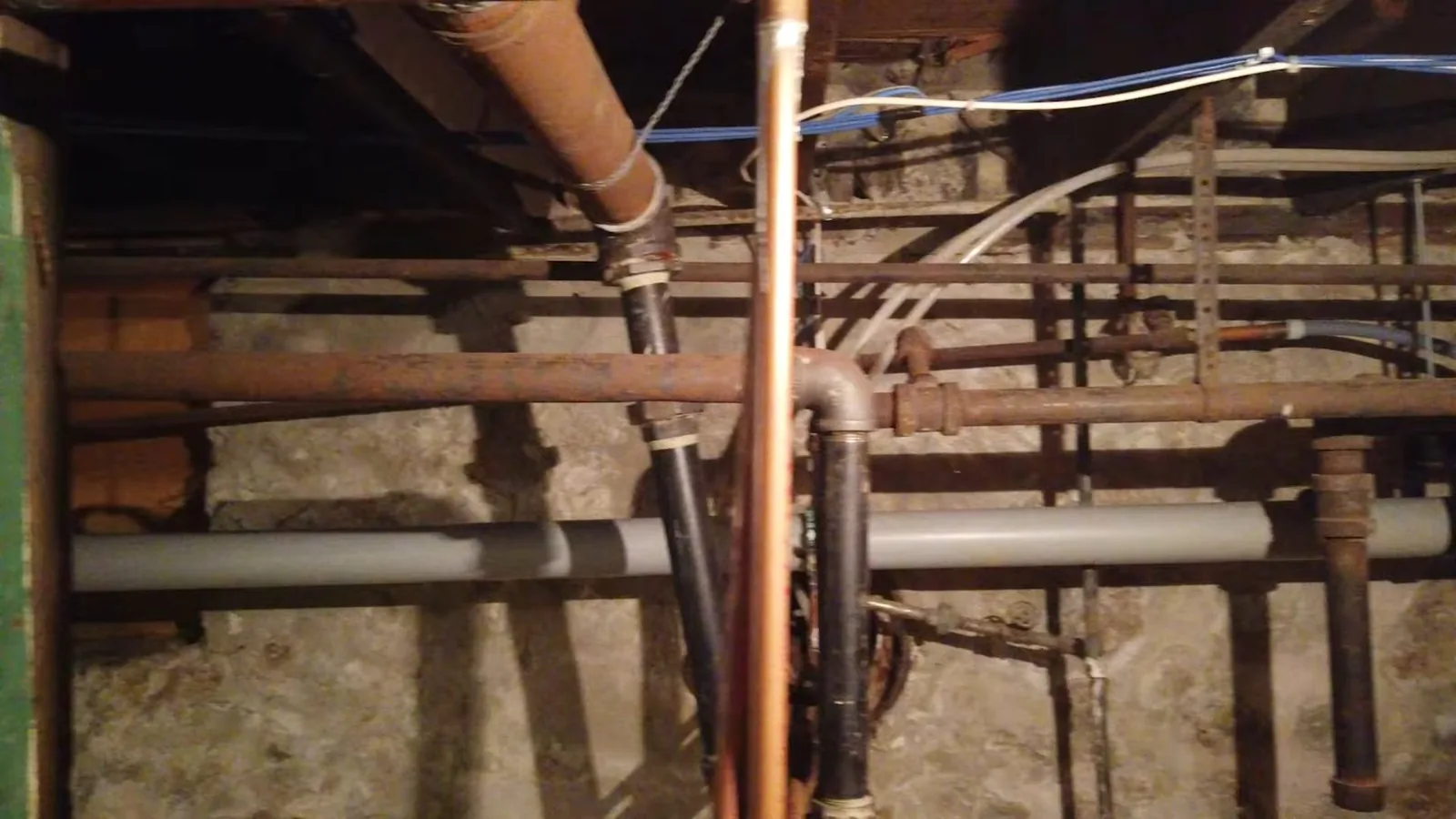
One leak or a pattern? Signs a pipe system is wearing out
A single failed pipe is a repair. A house where leaks keep turning up in new places is telling you something about the pipes as a whole. The signs below are the ones that usually lead to a repiping conversation.
- Pinhole leaks that appear in different spots, months or weeks apart.
- Brown or rust-tinged water, especially the first draw of the morning.
- Pressure that has dropped at several fixtures, not just one.
- Repairs that fail soon after, because the pipe next to the fix is also thin.
- A plumber who opens a wall and finds corroded or brittle pipe beside the leak.
Count the leaks and write down where each one was. Two leaks in a short time on the same line suggest a failing pipe, while two unrelated leaks of different ages may not. For a single failed section, see fixing one failed section, and for pinning down where water is escaping, confirming where the leaks are.
Which pipe material is in your walls? Age alone cannot say
The land use chapter of the City of Fairfax 2035 plan says much of the City was developed as single-family neighborhoods in the 1950s and 1960s, and that over 5,600 structures in the City are fifty years old or older. That describes the age of the housing. It does not say what pipe is inside any particular house.
Pipe material depends on the year built and on every repair since. Many houses have mixed systems, with old runs joined to newer sections added during a remodel or a water heater swap. A plumber who names your pipe material without looking is guessing.
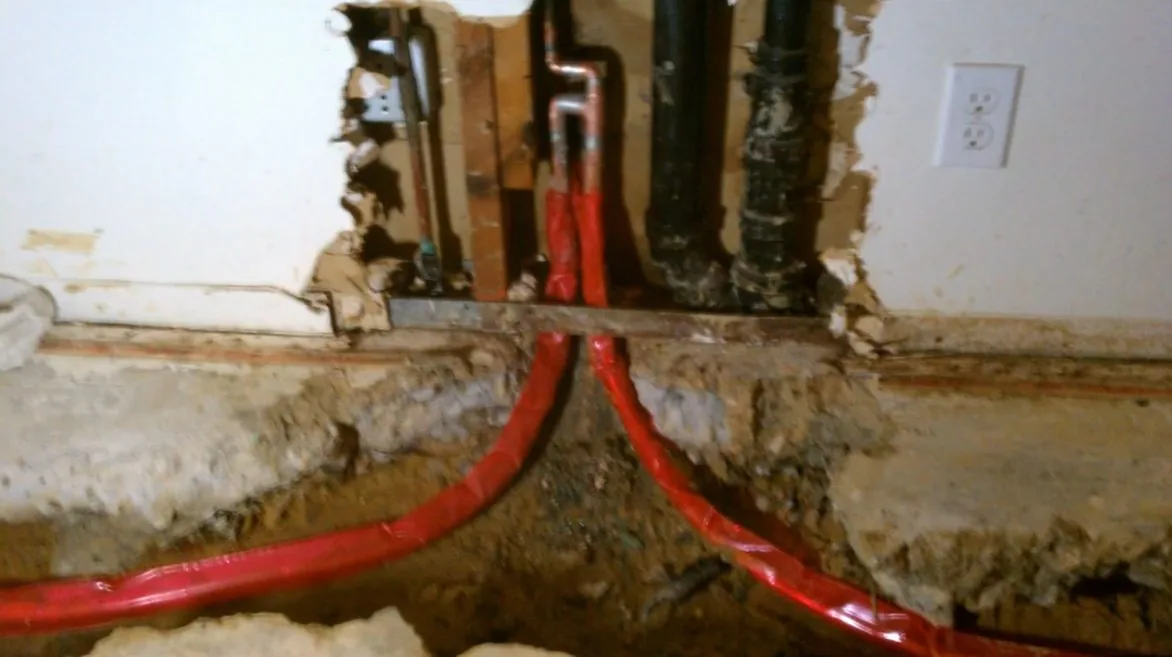
Ask the plumber to show you the pipe at the water heater, near the meter or under a sink, and to photograph it. Keep the photos with your records. The material and its condition at those points are the starting evidence for any quote.
Repair, partial repipe or whole house: a way to decide
| Option | When it fits | What to ask |
|---|---|---|
| Repair the leak | One failure, with the pipe on either side in sound condition | How did you check the pipe beside the leak? |
| Replace one run | One line, such as a bathroom branch, has failed more than once | Will the new run connect to old pipe, and how long will that joint be exposed? |
| Repipe the whole house | Leaks are recurring in several places and the pipe shows wear throughout | What evidence shows the pipe is failing everywhere, not only where it leaked? |
The honest answer is sometimes "repair now and watch it." A good plumber will say so, and will tell you what would change the advice. A quote that jumps to a whole-house job after one leak, with no evidence of wear elsewhere, deserves a second opinion.
PEX or copper repiping: why the material belongs in writing
Two materials dominate residential supply lines today. PEX is flexible plastic tubing that can be pulled through walls with fewer openings. Copper is rigid metal that is joined with fittings and has a long history in houses. Each has trade-offs, and the right choice depends on the house, the access and the plumber's experience with it.
- What material is proposed, and why that one for this house?
- What fittings and manifold arrangement will be used?
- What warranty comes from the manufacturer, and what comes from the contractor?
- Will the water heater and shutoff valves be replaced as part of the job?
If the water heater is near the end of its life, replacing it while the walls are open saves a second visit. See replacing the water heater during a repipe for what that involves.
Tell us how many leaks you have had and where. That decides whether to talk about repair or repiping.
Call (571) 749-1035Permits: what the City says and what to ask
The City of Fairfax states that a plumbing permit is needed to add, remove or relocate piping or fixtures. Replacing something in the same place with the same kind of item is exempt, except for shower pans. A repipe often reroutes lines through new paths, so assume a permit is involved and ask who pulls it.
Questions about what a particular job needs go to City Code Administration at 703-385-7830. These rules apply to addresses inside the City. For an address in Fairfax County, ask the plumber and the county office which rules apply before you assume the City's rules do.
How a repipe runs in a house you are living in
- The plumber walks the house, identifies the pipe and agrees a written scope with you.
- The water is shut off in stages, with a plan for when you can use a kitchen and bathroom.
- Access openings are cut in walls or ceilings, as few and as small as the layout allows.
- New lines are run, connected and pressure tested before anything is closed.
- Fixtures are reconnected, and the plumber and the inspector, if one is required, check the work.
- Openings are patched, or left for a drywall contractor, depending on what the quote says.
The last step is where surprises happen. Ask whether patching and painting are included, and who you call if a patch cracks later.
Planning around water that is off and walls that are open
Living in the house during the work is possible, but it takes planning. Ask how many hours each day the water will be off and whether you will have a working toilet during that time. Move furniture and valuables away from the walls being opened, and cover what cannot be moved.
Dust and noise are part of the job, so plan for pets, small children and anyone who works from home. Ask the plumber to confirm the schedule in writing, including what happens if opening a wall reveals something unexpected.
What the written quote should list
- The pipe material and fittings, and the water heater connections included.
- Which fixtures and shutoff valves are replaced and which are reused.
- Who applies for permits and arranges any inspection.
- How openings in walls and ceilings are made, patched and finished.
- The schedule, including the hours the water is off.
- What happens if the work finds a leak, damage or old pipe that was not visible earlier.
Get at least two quotes written to the same scope, so that the prices can be compared line by line. For why repiping quotes differ, see why repiping quotes differ.
Jobs that sound like repiping but are not
Repiping replaces the supply pipes that carry pressurized water into the fixtures. It does not replace the drain and sewer pipes, which are a different system. A backup is a sewer line job, not a supply problem.
A leak under a concrete floor is another case. Rerouting supply lines around a damaged section instead of breaking the slab is a form of partial repiping, covered under leaks under a concrete floor. If a leak has already damaged the building, drying comes first, which water extraction and drying explains.
Permit and ownership questions, such as what the City requires and what a county address needs, are answered on the permit and pipe questions page.
Leaks in more than one place?
Call, say how many leaks you have had and where. A plumber serving your area takes it from there.