
Toilet repair in Fairfax
Running, Clogged or Rocking? Toilet Repair in Fairfax, VA Explained
A toilet that runs, clogs or rocks has a cause you can usually narrow down in a few minutes. This toilet repair Fairfax VA page helps you tell a small repair from a replacement, run the dye test Fairfax Water describes, and know when a move needs a permit.
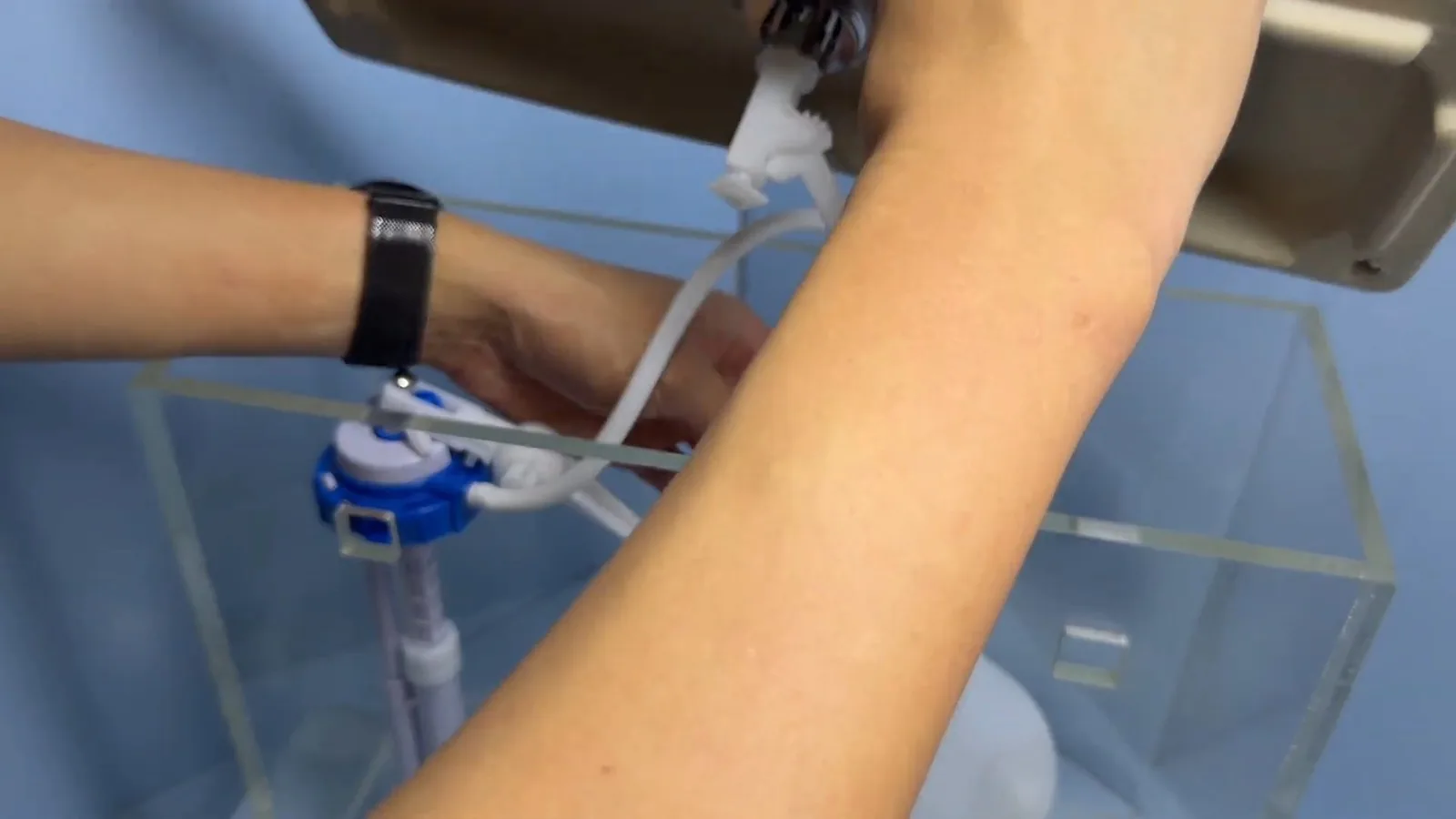
Which toilet problem do you have?
Toilets fail in a handful of ways, and each one has a different cause and a different cost. Match what you see to the table before deciding whether this is a ten-minute fix or a job for a plumber.
| What you notice | Usual cause | Plumber needed? |
|---|---|---|
| Runs on after flushing, or refills by itself | Worn flapper, bent chain or a fill valve that will not shut off | Often a small repair |
| Weak or slow flush | Partial clog, low tank water level or blocked rim holes | Sometimes |
| Water rises and will not go down | A clog in the toilet or the line behind it | If a plunger fails |
| Water around the base | Failed wax ring or seal, or a loose connection | Yes, soon |
| Toilet rocks or shifts | Loose bolts, a damaged flange or an uneven floor | Yes |
| Cracked porcelain | Impact or age | Yes, replace |
The dye test: is the tank leaking silently?
A toilet that leaks from the tank into the bowl may not make any noise. It wastes water around the clock, and it often explains a bill that went up with no other reason. Fairfax Water describes a simple test you can run yourself.
- Flush once and wait five minutes.
- Remove the tank lid and add five drops of red or blue food coloring, or a dye tablet. Do not flush.
- Wait 15 minutes without using the toilet.
- If color shows up in the bowl, the tank is leaking into it.
Fairfax Water lists the usual culprits as a worn flapper, a faulty flush arm or lift chain, a tank water level that is set too high so it spills into the overflow tube, and a corroded float rod or float. Dye tablets are available at Fairfax Water's Merrifield office. Details are on the utility's detecting leaks page.
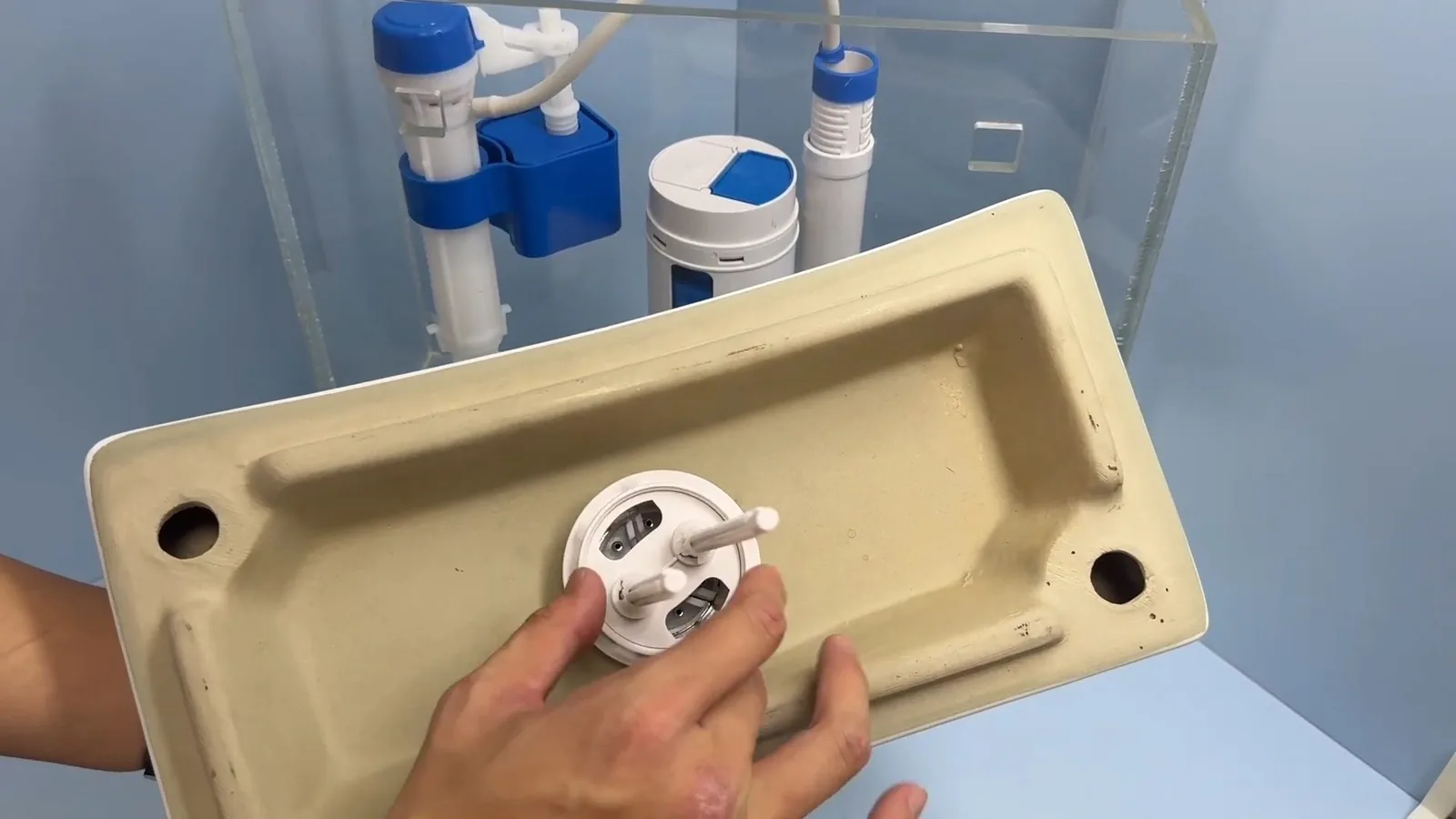
Clogged toilet: plunge first, then decide
A flange plunger, the kind with a rubber fold inside the cup, clears most single clogs. Seal it over the drain opening and push and pull steadily instead of pumping hard. Keep chemical drain products out of the bowl, because they sit in standing water and are unpleasant to handle if you end up calling someone.
Stop and call if the toilet clogs again within days, if water backs up into a tub or shower when you flush, or if several drains slow at once. Those signs point past the toilet to the line behind it. See what a blocked main line means for that case. Clogged-toilet work stays on this page, while sinks and tubs are covered under clearing other household drains.
Leaks at the base and a toilet that rocks
Water around the bottom of a toilet is not always the tank. It can be sweat from a cold tank, a loose supply connection, or a failed seal under the bowl. A seal that has failed lets water under the toilet and into the floor, where you may not see it for weeks.
Do not keep using a toilet that rocks or leaks at the base. Each flush can push water into the subfloor. Shut off the supply valve behind the toilet, which turns clockwise, and call. If the floor already feels soft or has stained, drying out a wet bathroom floor may be the next step.
Tell us what the toilet is doing and how long it has been doing it. That detail decides what the plumber brings.
Call (571) 749-1035Weak flush that is not a clog
Not every weak flush is a blockage. Mineral buildup can clog the small holes under the rim that feed the bowl, and a tank water level set too low gives the flush less volume to work with. Both are simple to correct, but only if someone looks at them.
Look at the water level in the tank. It should sit below the overflow tube by about an inch, and a mark inside the tank often shows the target. If the level is right and the flush is still weak, say so when you call, because the plumber will check the rim holes and the trapway.
What a toilet repair visit should include
- A test flush before and after the work.
- A check of the supply valve and hose for corrosion or slow seepage.
- A check of the seal at the base for movement or moisture.
- A look at the floor around the toilet for soft spots.
- A plain statement of what failed and what else is close behind it.
Repair or replace the toilet?
Repair makes sense when the porcelain is sound and one part is failing, such as a flapper, fill valve or seal. Replacement makes sense when the bowl or tank is cracked, when the toilet keeps clogging despite a clear line, or when repeated parts have cost more than a new unit.
- Ask what failed and whether the rest of the working parts are the same age.
- Ask for the repair option and the replacement option together.
- Ask whether the supply valve and the hose need replacing at the same visit.
- Ask whether the old toilet will be hauled away.
Installing or moving a toilet: what changes the job
A new toilet in the old spot is the simple case. The key measurement is the rough-in, the distance from the finished wall to the center of the drain. A toilet has to match it, so measure before you buy one.
Moving a toilet is a bigger job. The City of Fairfax requires a plumbing permit to add, remove or relocate fixtures and piping, while replacing a fixture in the same place with the same kind is exempt. Ask the plumber who pulls the permit if the toilet is moving, and see the City's permit questions page for the rule.
When a toilet is behind a high water bill
If the meter or the bill points to a leak, the toilet is the first place to look. Fairfax Water offers a one-time courtesy adjustment for unusually high charges caused by a leak. To qualify, the leak must be repaired promptly and you must give written proof of the repair, such as a receipt or invoice. Keep the paperwork from whoever does the work.
For a wider search, tracing a hidden water leak starts with the meter test. For faucets and showers, see fixing a dripping faucet. For pricing context, what a toilet repair can cost is explained on the cost page.
Toilet running, clogged or leaking?
Call, say what the toilet is doing and how long it has been happening. A plumber serving your area takes it from there.