
Tankless water heater service in Fairfax
Hot Water Running Out? Tankless Water Heater Install and Repair in Fairfax, VA
A tankless unit solves hot water running out, but it changes more of the house than a tank swap does. This tankless water heater Fairfax VA page covers the gas, venting and electrical checks, the City permits, hard water, point-of-use units and what a repair visit looks at.
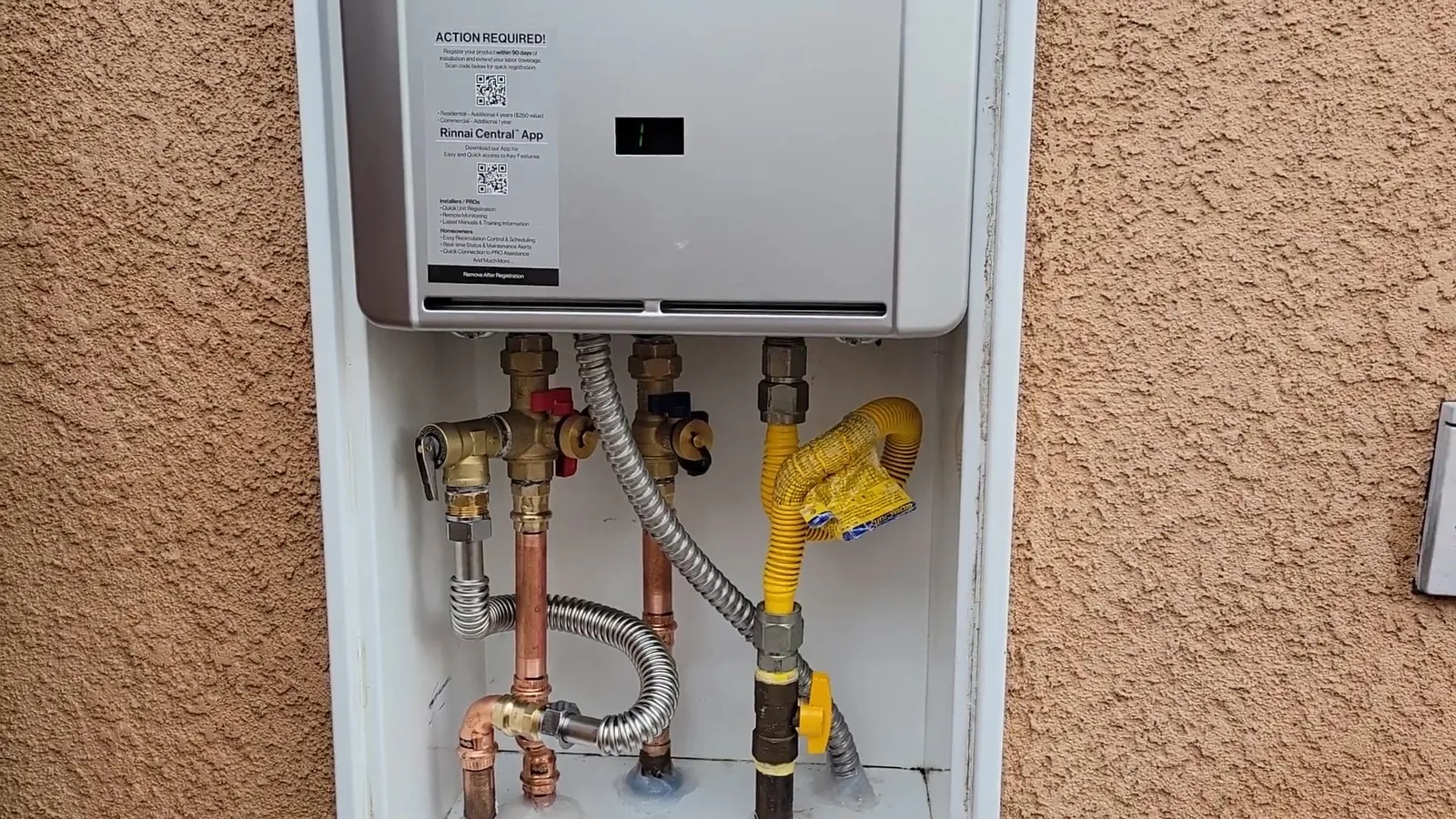
Is tankless the right move for this house?
A tankless water heater heats water as it flows instead of storing it, so it does not run out the way a tank can. That is the main appeal, and it is real. It is also a bigger change than swapping one tank for another, because the gas line, the venting and the electrical supply may all need to change with it.
Start with the problem you want to solve. If the complaint is hot water running out, tankless addresses it directly. If the complaint is a tank that has failed, a like-for-like tank may be the simpler route, covered under replacing a tank water heater. The two choices are close enough that a written comparison from the plumber is worth asking for.
| Type | Good fit | Check first |
|---|---|---|
| Tank | Simple swap, existing venting and gas line in place | Space for a tank and a drain pan |
| Whole-house tankless | Repeated hot water shortages, or a wish to reclaim the closet space | Gas line capacity, vent route, electrical supply |
| Undersink or point-of-use | One distant sink or bath that waits too long for hot water | An outlet or short run available at that spot |
The checks that decide whether it can be installed
A tankless unit needs a lot of energy for a short time, because it has to heat water instantly. That is why the surroundings matter more than the unit.
- Gas capacity. A gas unit can draw far more gas at once than a tank burner. The plumber should confirm the existing line and meter can supply it, and say if the line must be enlarged.
- Venting. Tankless units vent differently from tanks. Ask where the vent will go and whether it needs a new route through a wall or roof.
- Electrical supply. Electric units draw heavily, and a gas unit still needs power for its controls. An electrician may need to be part of the job.
- Water supply. Water pressure and flow affect how a unit performs, so ask what the plumber measured.
A quote that does not mention any of these is incomplete. The gas question is closely related to the gas piping questions that come up with appliances, which that page covers in more detail.
Sizing: how much hot water you need at once
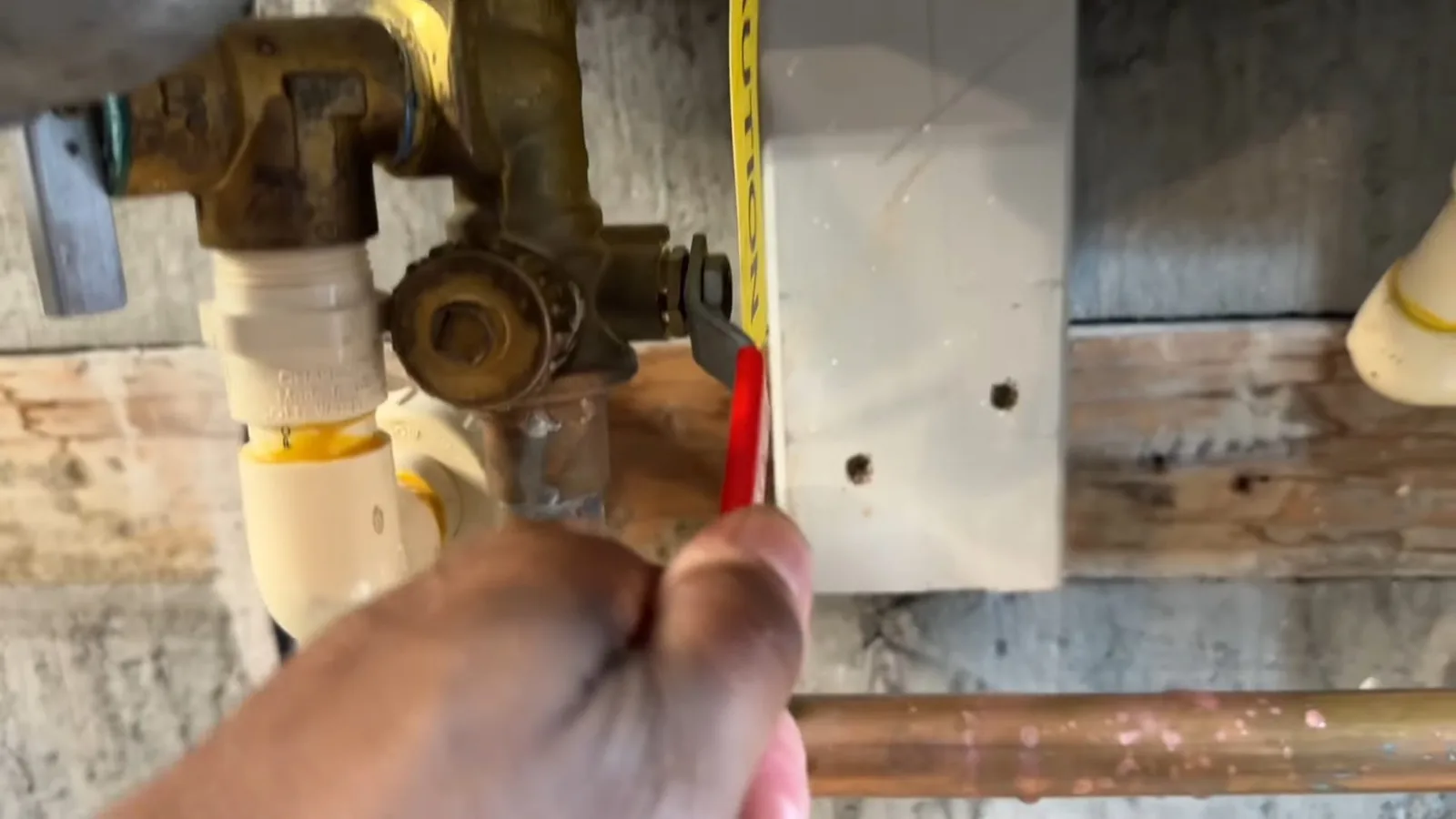
A tankless unit is sized by how much hot water it can deliver at one moment, not by how much it stores. The question is how many fixtures run together at the busiest time of day. A shower, a dishwasher and a washing machine at once ask for far more than one tap alone.
Count those uses for your household and tell the plumber. A unit that fits a couple may disappoint a family that showers back to back. Ask the plumber to explain the choice in plain terms, and to say what happens if two showers and a dishwasher run together.
Permits in the City of Fairfax: gas and electric differ
The City states that a permit is needed to add, remove or relocate piping or water heaters. For a natural gas water heater, the City says both a gas permit and a plumbing permit are required. For an electric unit, it asks for electrical and plumbing permits.
That means a tankless job usually involves more than one permit, and the line between the plumber and an electrician can matter. Ask who applies for each one. Questions about a particular job go to City Code Administration at 703-385-7830. These rules apply inside the City. For a county address, ask which rules apply.
Hard water and what it does to a tankless unit
Fairfax Water reports typical hardness of 5 to 10 grains per gallon, which it describes as moderately hard to hard, varying with location and rainfall. Hardness leaves mineral scale where water is heated. A tankless heater has narrow passages, so scale there matters.
That does not mean every home has trouble, and it does not mean tankless is a bad choice here. It means flushing the unit on the manufacturer's schedule is part of ownership. Ask the plumber for the schedule, how the flush is done and whether the unit has isolation valves that make flushing easy.
Tell us what you have now and what bothers you about it. That decides whether to look at tankless at all.
Call (571) 749-1035Undersink and point-of-use units
A small unit under one sink gives hot water at that spot without waiting for the long run from the main heater. It suits a bathroom or a kitchen far from the heater, or a room added later. It does not heat the whole house.
These units are electric and usually plug into an outlet or connect to a nearby circuit. Ask where the power will come from, how much hot water the unit supplies and whether the sink fits it. For a simple hot-water wait, a recirculating loop may be an alternative worth discussing.
When a tankless heater stops working
A tankless unit that has stopped heating is a repair question, and the common causes are fewer than they seem. A plumber who services the brand can narrow it down quickly if you can describe what happened.
- No hot water at all, or hot water that turns cold in the middle of a shower.
- An error code on the display, which you should photograph.
- Noise, a smell or a flame that does not look normal.
- Water that is lukewarm when more than one fixture is open.
- A leak at the unit or the connections.
Scale, a blocked vent, a gas supply problem and a failing sensor are among the usual causes, and each needs a different fix. Tank problems, such as a rusted tank or a failed element, are covered under repairing a tank heater.
What the quote should say
- The make and model, and why it fits your household.
- Whether gas line, venting or electrical changes are included.
- Who applies for each permit and arranges the inspection.
- The flushing schedule and any isolation valves.
- The warranty from the manufacturer and from the installer.
- What happens to the old tank, and who removes it.
Compare at least two quotes written to the same scope. For how installation prices vary, see how heater installs are priced. If the old heater has already failed and you have no hot water, the urgent plumbing page lists what to do first.
Hot water not enough?
Call, say what you have now and what bothers you about it. A plumber serving your area takes it from there.