
Garbage disposal repair in Fairfax
Humming, Jammed or Leaking? Garbage Disposal Repair in Fairfax, VA
Most disposal trouble is a jam, a reset or a loose connection, and a few cases need a new unit. This garbage disposal repair Fairfax VA page ties the symptom to the cause, shows the safe way to clear a jam, and covers leaks, installs and what not to grind.
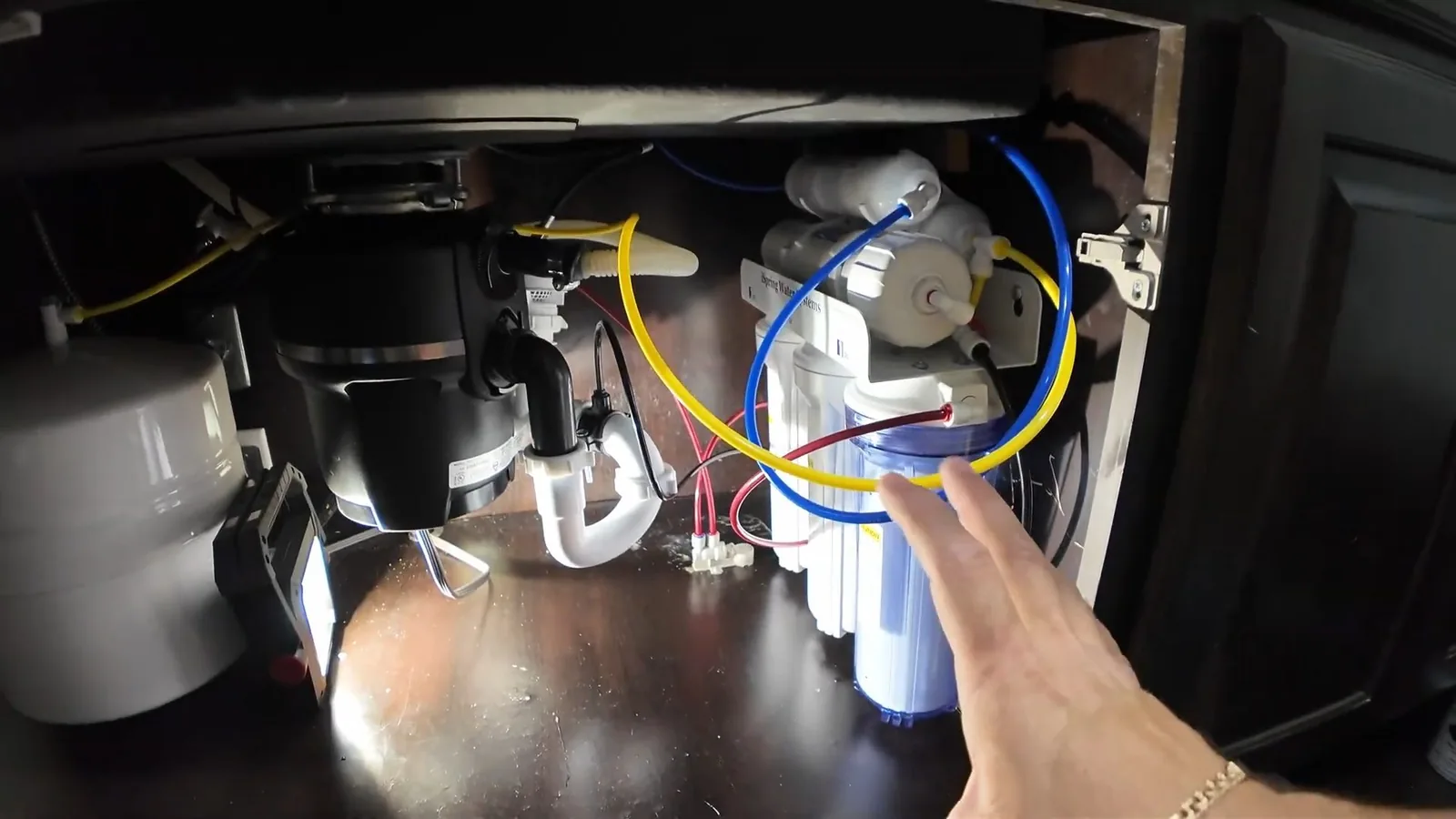
What is the disposal doing? Match the symptom to the cause
| What you notice | Likely cause | What to do |
|---|---|---|
| Hums but the blades do not turn | A jam, such as a bone, a fruit pit or a utensil | Switch off the power, then clear the jam (see below) |
| Silent, no hum | Tripped reset button, a switch problem or a dead motor | Check the reset button and the wall switch, then call |
| Water under the sink | A loose connection, a failed seal or a cracked body | Find where it starts before deciding repair or replace |
| Drains slowly or backs up into the sink | A clog past the disposal, not the unit itself | Treat it as a drain problem |
| Smells even when clean | Residue trapped under the splash guard or in the chamber | Clean the guard and chamber; if it persists, check the drain |
Most of these are separate problems that share one sink, which is why guessing wrong costs time. A disposal that hums is usually jammed. A sink that will not drain with the disposal running often has a clog further down, not a broken disposal.
Safety first: never put a hand in the disposal
Turn off the wall switch and unplug the unit, or switch off its breaker, before touching anything. A disposal that seems dead can start if power returns, and the blades are sharp enough to injure.
Use a wooden spoon handle or tongs to remove visible debris, never your fingers. Many disposals have a hex socket in the bottom, where a wrench can turn the blades back and forth to loosen a jam. Check the manufacturer's label for the size, then press the red reset button on the bottom once the jam is clear.
- Switch off the power at the wall and at the breaker if you can.
- Look into the chamber with a flashlight and remove anything you can see using tongs.
- If the unit has a hex socket underneath, turn it with a wrench until the blades move freely.
- Press the reset button on the bottom of the unit.
- Restore power and run cold water, then test the unit briefly.
A leak under the sink: where it is coming from
Water under a disposal can come from several places, and the fix differs for each. Run a little water and watch, using a dry paper towel to find the wet spot.
- The top flange. Water at the sink drain opening that runs down the outside points at the seal under the sink.
- The dishwasher hose. A loose clamp where the dishwasher drains into the disposal can seep.
- The drain connection. The outlet pipe to the trap is held by a gasket or a clamp that can loosen.
- The body. Water from the bottom or sides of the housing usually means the unit has failed.
A loose clamp or a failed seal is a repair. Water from the body is a replacement, because the housing cannot be fixed. Dry the cabinet floor afterwards, since a small leak left unattended can soak into the cabinet and spread. For drying a wet cabinet, see drying out a soaked cabinet floor.
Tell us whether it hums, stays silent or leaks, and what you have tried. That decides whether it is a repair or a swap.
Call (571) 749-1035Repair or replace a disposal: jams, seals and dead motors
A jam or a tripped reset is a quick fix, and a replaced seal or clamp is not expensive in labor. A dead motor or a leaking body is different. The unit is a relatively low-cost appliance, so repairing an old one often costs more than a new one does in the long run.
- Repair when the problem is a jam, a reset, a loose clamp or a failed seal.
- Replace when the body leaks, the motor is dead or the unit has failed repeatedly.
- Replace when the unit is underpowered for how you use it.
- Ask what the old unit's age and warranty status are before paying for a repair.
The honest answer for an old unit with a bad motor is usually replacement, and a plumber who says so is not upselling. Ask for the reasoning in plain terms.
Installing a disposal: what changes the job
A like-for-like swap is simple. A first-time install is a bigger job, because it adds an electrical connection, a drain change and, when a dishwasher is attached, a connection to its hose.
- Power. The unit needs an outlet or a hardwired connection under the sink, with a switch you can reach.
- Drain. The trap and tailpiece usually need to change to fit the disposal's outlet.
- Dishwasher. The drain hose connects to an inlet on the disposal, with a knockout plug that must be removed.
- Sink opening. A standard sink opening fits most models, but check before buying.
The City of Fairfax says a plumbing permit is needed to add, remove or relocate fixtures, and that replacing something in the same place with the same kind of item is exempt. A first install may count as adding a fixture, so ask who pulls the permit. Questions go to City Code Administration at 703-385-7830. These rules apply inside the City.
What not to put down the disposal
Most disposal trouble starts with what went in. Fairfax County Public Works says fats, oils and grease do not dissolve in water and stick to the inside of pipes, and that hot water only pushes grease further down. A disposal grinds food but does nothing about grease.
- Grease, oil and fat from cooking.
- Bones, fruit pits and corn husks.
- Fibrous stalks like celery and artichoke.
- Coffee grounds in large amounts, and starchy foods such as rice and pasta.
- Non-food items, including utensils and bottle caps.
Scrape plates into the trash. When a line has already coated over, the usual fix is described under cleaning grease from the pipe wall.
When the problem is the drain, not the disposal
A disposal that runs fine while the sink drains slowly points past the unit. A kitchen drain that clogs again and again is often coated with grease downstream. That is a clog job, handled under clearing a slow kitchen drain, and a persistent one may need a camera to see what is in the line.
If dirty water comes back up through more than one fixture, treat it as a larger line problem and stop using the sink.
Repair or replace, model, hookups and permit: questions to ask
- Is this a repair or a replacement, and why?
- If replacing, what model and horsepower, and why that one?
- Does the quote include the electrical connection and the dishwasher hose?
- Who pulls the permit, if one is needed?
- What is the warranty on the new unit and on the work?
For a sense of price, see what a disposal swap costs. A sink that is leaking at the faucet instead is covered under repairing the sink above the cabinet.
Disposal jammed or leaking?
Call, say whether it hums, stays silent or leaks. A plumber serving your area takes it from there.